

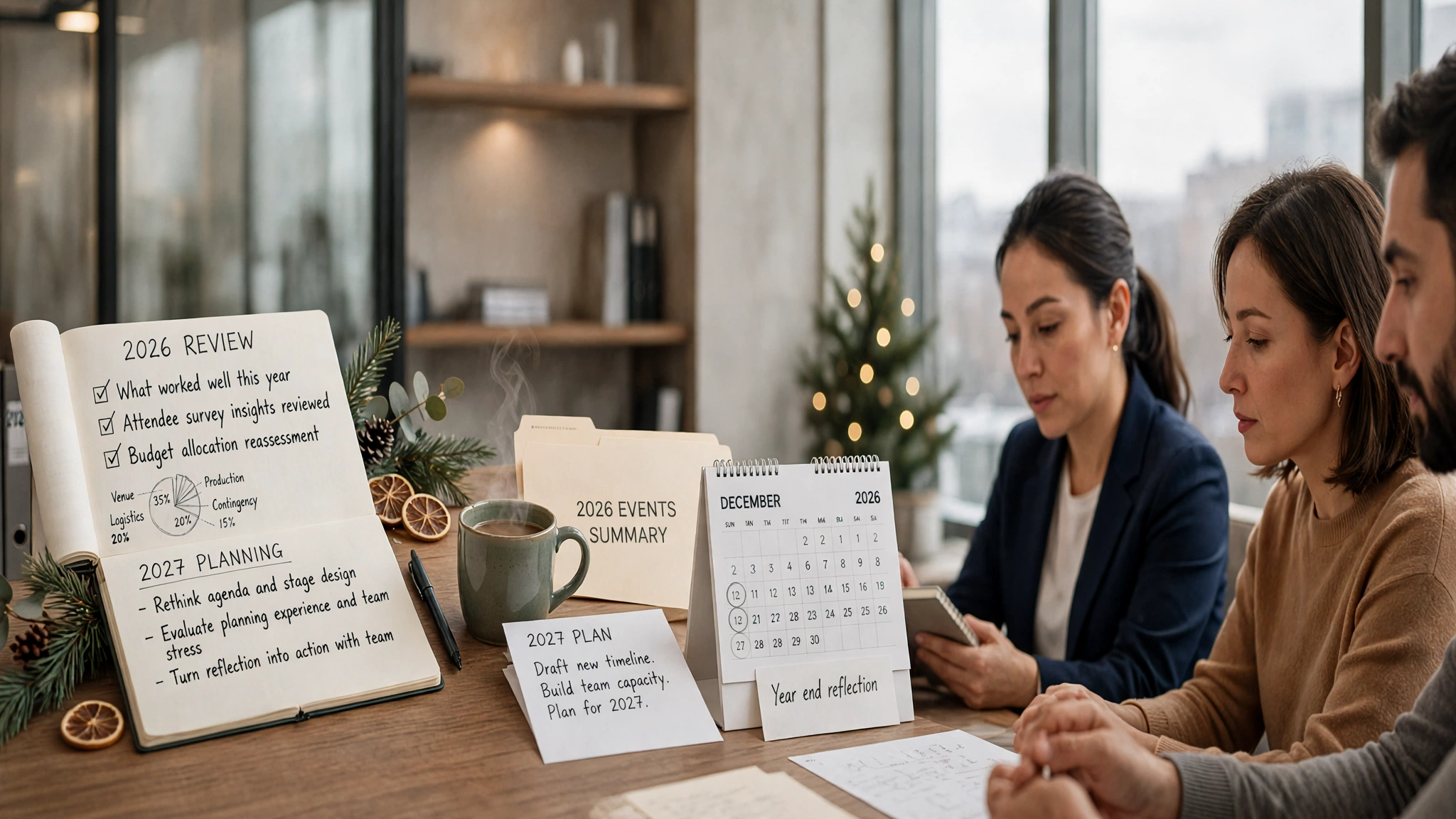
December offers a valuable opportunity for meeting and event planners to reflect on the experiences they created throughout the year. With the pressure of immediate deadlines behind us and planning for 2027 underway, it’s a good time to evaluate not only whether our events were successful, but how we could make them even better.
Post-event surveys and budget reconciliations provide useful information, but some of the most valuable insights come from examining the decisions, processes and partnerships that shaped the event from the beginning.
Look Beyond the Attendee Survey
Attendee feedback is an important measure of success, but attendees only experience the finished product. They don’t see the compromises made during planning, the opportunities that were missed or the last-minute adjustments that were necessary to deliver the experience.
Consider whether the event accomplished what it was originally designed to achieve. Did the environment encourage meaningful connections? Did the general sessions maintain engagement? Did the event reinforce the organization’s brand and messaging? Were there opportunities to create more memorable moments without significantly increasing the budget?
These questions can help identify opportunities that a traditional satisfaction survey might overlook.
Revisit How You Allocated Your Budget
Rather than using last year’s budget as the starting point for next year’s event, consider which investments delivered the greatest value. There may be elements that have become standard simply because they’ve always been included, while other areas could benefit from greater attention.
Perhaps a different room configuration would have encouraged more interaction, or a stronger approach to visual storytelling would have made presentations more compelling. Sometimes the greatest improvements come from reallocating existing resources rather than increasing overall spending.
Evaluate the Planning Experience
A successful event shouldn’t require the planning team to operate in a constant state of urgency. Think about the moments that created unnecessary stress throughout the planning process and whether they could have been prevented through earlier collaboration, clearer communication or better-defined responsibilities.
Consider how effectively your production partners contributed to the process. Did they anticipate challenges, offer creative solutions and help you make informed decisions? Were they actively involved in understanding your objectives, or were they primarily responding to requests?
The quality of your planning experience deserves consideration alongside the quality of the event itself.
Challenge the Familiar
Annual conferences and recurring events naturally develop a sense of familiarity. Consistency can be valuable, but it can also make it difficult to recognize opportunities for improvement.
Before committing to the same agenda structure, stage design or presentation formats, consider what you might do differently if you were designing the event from scratch. Changes in audience demographics, organizational priorities and attendee expectations may warrant a fresh approach, even for an event with a long history of success.
Turn Reflection Into Action
Before moving into the new year, take some time with your team to answer five questions:
- What delivered the greatest value to our attendees?
- Where could we have used our budget more effectively?
- What created unnecessary stress for our planning team?
- Which decisions would have benefited from earlier collaboration?
- What would we do differently if we were designing the event from scratch?
Share those answers with your production partners early in the planning process. They can become the foundation for a more intentional approach to creative direction, production planning and technical execution.
At Technisch Creative, we believe some of the most important production conversations happen long before equipment is selected or a stage is designed. Understanding what an organization wants to accomplish, what its attendees need and what its planning team learned from previous experiences allows us to develop solutions that serve the event’s larger purpose.
As you look ahead to 2027, give yourself permission to rethink what has become familiar. Even a highly successful event has room to evolve, and the lessons from this year may be your most valuable planning resource for the next.